

Why Private, Confidential Safe Homes Matter for Teen Survivors of Trafficking
Why Private, Confidential Safe Homes Matter for Teen Survivors of Trafficking
For teen girls recovering from the trauma of trafficking, where healing happens matters just as much as how it happens. A safe home is not simply a roof and a bed; it is a carefully chosen environment designed to protect, calm, and restore.
Privacy and confidentiality are not optional. They are foundational.
- Visible, busy shelters can increase vulnerability
Research from Polaris and the Safe House Project notes that publicly advertised shelters and homeless shelters, often located in visible, high-traffic urban areas, can be places where traffickers find and recruit vulnerable individuals because they know where people are congregating. This is one reason trafficking-specific safe homes are intentionally designed to be private, confidential, and trauma-informed rather than open, public shelters.
As the Safe House Project explains:
“Homeless shelters are some of the most vulnerable places for potential victims of human trafficking…they have publicly available addresses and are open to all people, leaving residents vulnerable to traffickers and recruiters.”
For teen survivors, visibility can equal danger. Reduced exposure is a critical layer of protection.
- Housing stability is a protective factor
The Housing Needs of Survivors of Human Trafficking study from HUD underscores that stable, safe housing significantly lowers the risk of re-victimization. When survivors are placed in secure, predictable environments with reduced exposure to traffickers and daily stressors, their long-term safety and recovery outcomes improve.
Stability allows the nervous system to settle. It creates space for trust, routine, and healing to take root, especially for adolescents whose development has been disrupted by trauma.
- Trauma-informed design supports low-stimulus, confidential locations
Trauma-informed care frameworks consistently emphasize physical and emotional safety, predictability, and reduced triggers. Busy streets, constant noise, foot traffic, and visibility can overwhelm a traumatized nervous system, keeping survivors in a state of hyper-vigilance.
While research may not always specify exact traffic patterns, the principle is clear: environments away from heavy public activity and traffic are more conducive to healing. Quiet, residential settings reduce sensory overload and allow teen survivors to begin regulating their bodies and emotions without constant external stress.
- Lessons from confidentiality programs for other survivors
Address confidentiality programs used for survivors of domestic violence and stalking exist because visibility and publicly identifiable locations can increase danger. While these programs are not trafficking-specific, they reinforce the same core principle: anonymity is safety.
For survivors who have been hunted, controlled, and monitored, being hidden is not secrecy; it is protection.
Why these matters
For teen girls recovering from trafficking, safety means more than shut doors.
It means not being easily found.
It means quiet instead of chaos.
It means a home intentionally placed where healing is possible.
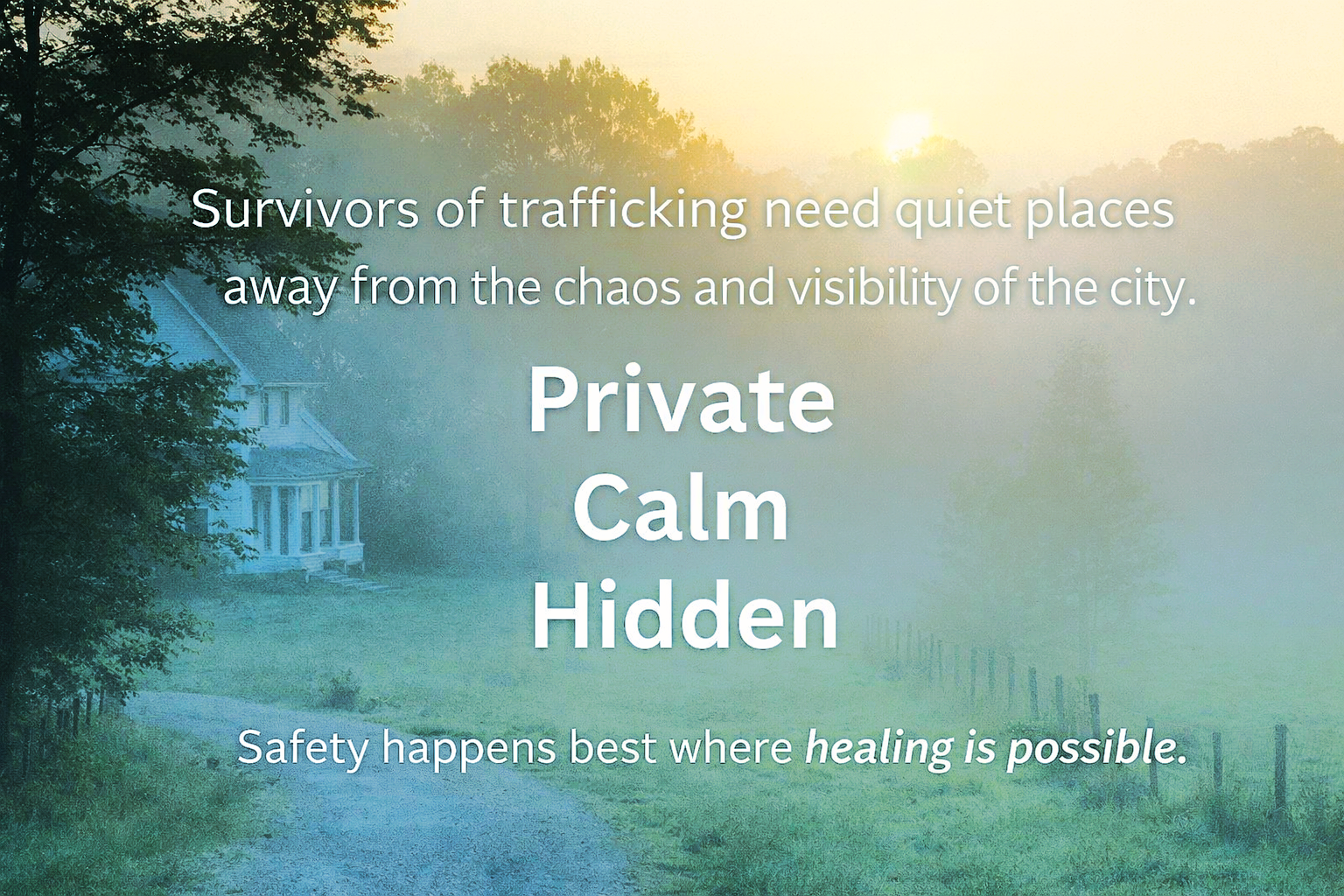
We believe this healing happens best away from the noise and visibility of the city,
in private, rural settings surrounded by nature, where there is less traffic, fewer strangers, and reduced exposure to risk.
These environments not only support nervous system regulation and recovery, but they also reduce opportunities for impulsive flight, giving teens the time, space, and stability they need to build trust, safety, and connection.
True recovery happens best in homes that are calm, private, and discreet places where teen survivors can rest, rebuild trust, and begin healing with dignity, care, and long-term safety in mind.
Citations for our article: