When Survivor Empowerment Becomes Survivor Idolization
When Survivor Empowerment Becomes Survivor Idolization: For many years, survivors of human trafficking, sexual exploitation, abuse, and other forms of trauma were spoken about rather than listened to.
The movement toward survivor-informed and survivor-led work was necessary. Lived experience provides insight that cannot be gained solely through a textbook, professional training, or academic degree.
Survivors deserve a voice. They deserve a seat at the table. They deserve opportunities to lead.
But somewhere along the way, parts of our culture have begun confusing honoring survivors with idolizing survivors.
There is an important difference.
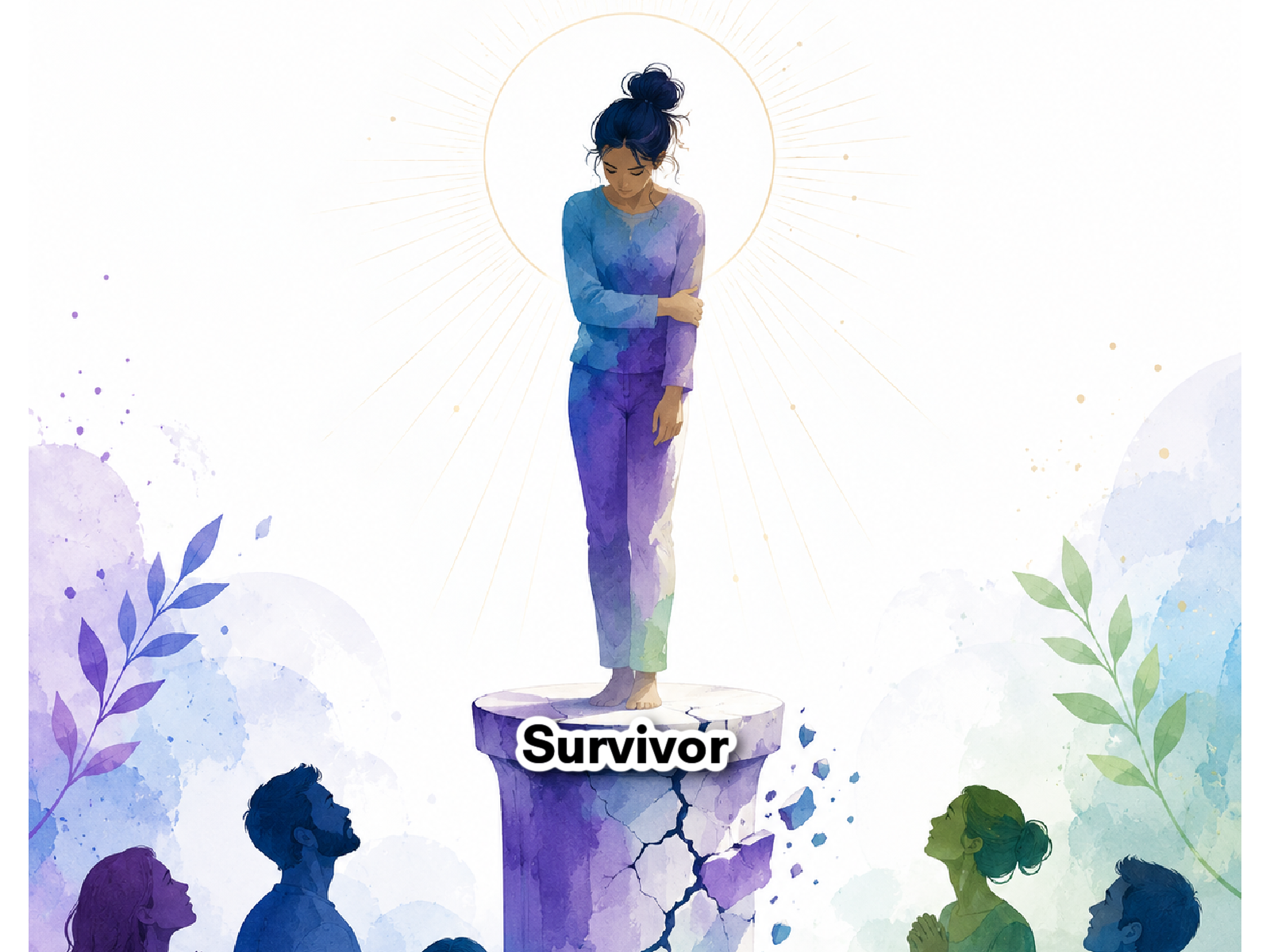
And when we place survivors on pedestals because of what they endured, we may unintentionally dehumanize the very people we say we are empowering.
Survivors Are Human Beings
This should be obvious, yet sometimes our language and practices suggest otherwise.
Survivors have strengths and weaknesses.
They have gifts and faults.
They make wise decisions and poor ones.
They can demonstrate extraordinary resilience and still struggle emotionally.
They can be effective leaders and still need accountability.
They can offer tremendous insight from their lived experience while still needing professional development, mentorship, counseling, education, boundaries, and continued healing.
Trauma doesn’t magically disappear when someone becomes an advocate, speaker, employee, consultant, or leader.
A public platform is not evidence that healing is complete.
In fact, healing is rarely a straight line.
Trauma Can Continue to Affect a Person’s Life
From a therapeutic perspective, significant trauma can affect many areas of a person’s life long after the traumatic experience has ended.
Depending on the individual and their experiences, trauma can influence trust, relationships, attachment, emotional regulation, boundaries, conflict, self-worth, perceptions of safety, and responses to perceived rejection or abandonment.
This does not mean every survivor will experience these struggles, nor does it mean survivors are incapable of healthy relationships or leadership.
It means trauma is complex.
A person can be highly successful in one area of life while still carrying unresolved wounds in another.
That is why trauma-informed care should recognize both a person’s strengths and the areas where continued healing may be necessary.
Pretending survivors no longer struggle because they have become successful advocates isn’t trauma-informed.
It creates an unrealistic expectation.
A Pedestal Can Become Another Form of Dehumanization
We often think dehumanization means treating someone as less than human.
But we can also fail to recognize someone’s humanity when we treat them as though they are more than human.
When a survivor becomes “the survivor voice,” people may begin treating that person’s perspective as unquestionable.
Their testimony can become their authority.
Their lived experience can begin to overshadow other qualifications.
People may become afraid to disagree with them because they don’t want to appear insensitive to survivors.
Organizations may hesitate to establish boundaries or provide correction.
That isn’t healthy empowerment.
It is a pedestal.
And pedestals are lonely places.
Survivors deserve the freedom to be imperfect human beings without having their mistakes interpreted as failures of the entire survivor community.
Lived Experience Is Valuable, But It Is Not Universal Expertise
Lived experience provides a type of knowledge that professionals without that experience simply cannot possess.
We should value it.
But experiencing trafficking, exploitation, abuse, or another form of trauma does not automatically make someone an expert in every area connected to it.
A survivor may have tremendous insight into grooming or exploitation while having no professional training in clinical trauma treatment.
Another may become an exceptional therapist, attorney, nonprofit executive, researcher, law enforcement professional, or policy expert because they have combined lived experience with education and professional development.
Those distinctions matter.
We should never minimize lived experience.
But we shouldn’t tokenize it either.
And no single survivor should be expected to represent every survivor.
Survivors have different backgrounds, experiences, beliefs, cultures, personalities, trauma histories, recovery journeys, and perspectives.
There is no single “survivor voice.”
There are survivor voices.
Trauma-Informed Does Not Mean Accountability-Free
This is one of the most important distinctions organizations serving survivors need to understand.
Being trauma-informed does not mean excusing every behavior because trauma may help explain it.
Understanding the origin of a behavior and determining whether that behavior is healthy are two different things.
We can say:
“I understand why this may be difficult for you.”
And at the same time say:
“This behavior is not healthy or acceptable.”
Those statements do not contradict each other.
Compassion and accountability belong together.
Healthy boundaries are not punishment.
Correction is not automatically rejection.
Professional expectations are not discrimination.
And accountability is not the opposite of trauma-informed care.
When practiced appropriately, boundaries and accountability can actually create predictability, safety, stability, and healthier relationships.
The Biblical Problem With Pedestals
For Christian organizations and ministries, there is another important consideration.
Scripture does not teach us to idolize human beings.
“You shall have no other gods before Me.” Exodus 20:3
And Romans reminds us:
“For all have sinned and fall short of the glory of God.” Romans 3:23
All means all.
Pastors.
Leaders.
Advocates.
Professionals.
Founders.
And survivors.
A powerful testimony does not make someone infallible.
A traumatic history does not place someone beyond correction.
A public platform does not automatically establish character.
And lived experience should never become a substitute for wisdom, integrity, maturity, training, or accountability.
For Christians, our ultimate identity is not found in what happened to us.
Our identity is found in Christ.
That means a survivor should never have to remain permanently identified by the darkest chapter of their life in order to remain valuable to a movement, organization, ministry, or audience.
Survivors Deserve to Become More Than Their Trauma
There is something else we rarely discuss.
What happens when we continually introduce someone as a survivor?
What happens when the primary reason we invite them to speak is their trauma?
What happens when their most painful memories become the thing audiences most want from them?
We should ask ourselves whether we are empowering that person or unintentionally reinforcing an identity built around what someone else did to them.
Survivors deserve the opportunity to become known for their character, gifts, education, leadership, creativity, parenting, careers, faith, accomplishments, humor, interests, dreams, and everything else that makes them who they are.
Their trauma may be part of their story.
It should not have to remain their entire identity.
What Healthy Survivor Leadership Looks Like
Healthy survivor leadership doesn’t remove survivors from the table.
It makes their place at the table stronger.
We should listen to survivor perspectives.
We should include lived experience in program development.
We should compensate survivors appropriately for professional work.
We should create meaningful leadership opportunities.
We should encourage education, training, mentorship, and professional development.
We should protect survivors from being pressured to continually disclose painful details for fundraising or awareness.
And we should maintain the same healthy expectations for integrity, boundaries, respect, and accountability that we would expect from anyone else.
That isn’t diminishing survivors.
It is respecting them enough to treat them like whole human beings.
Take Survivors Off the Pedestal and Give Them a Seat at the Table
The goal of survivor empowerment should never be to create another category of people whom society is afraid to question.
The goal should be dignity.
Safety.
Healing.
Opportunity.
Growth.
Purpose.
Freedom.
Survivors don’t need to be treated as flawless to be valuable.
They don’t need to have completely healed to contribute.
They don’t need to speak for everyone.
They don’t need to turn their trauma into a career.
And they shouldn’t have to remain “the survivor” forever.
We can honor courage without idolizing a person.
We can respect lived experience while recognizing professional expertise.
We can extend grace while maintaining boundaries.
We can understand trauma while still expecting accountability.
We can celebrate how far someone has come while recognizing there may still be significant healing ahead.
Survivors don’t need pedestals. They need dignity, truth, grace, healthy accountability, opportunities to grow, and people willing to walk beside them.
Because perhaps one of the most powerful things we can ever communicate to a survivor is this:
What happened to you matters. Your voice matters. But what happened to you is not all that you are.
Written by Julie Shrader